Platform Trailers
Step Deck Trailer
SIGMA's step deck trailer drops the main deck lower than a standard flatbed while keeping a raised front section over the gooseneck.
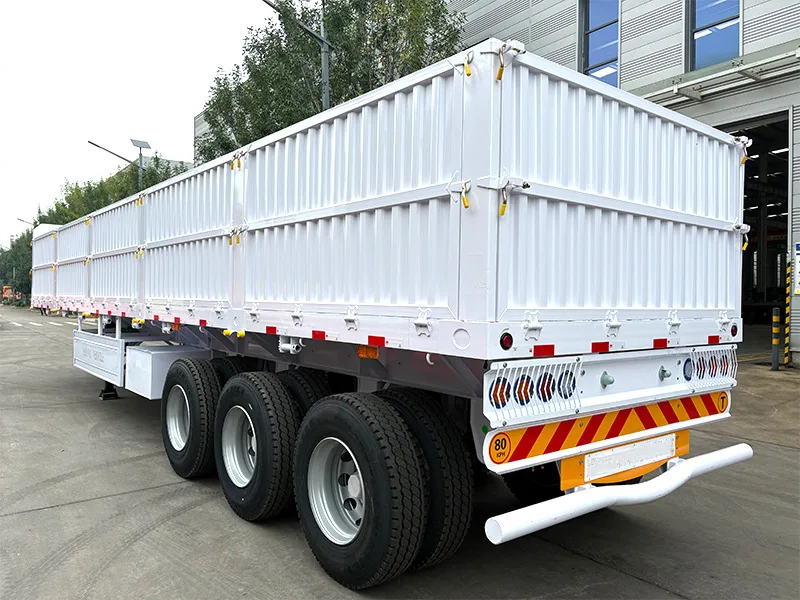
Over 10 years of manufacturing excellence, trusted by clients in 50+ countries.
Overview
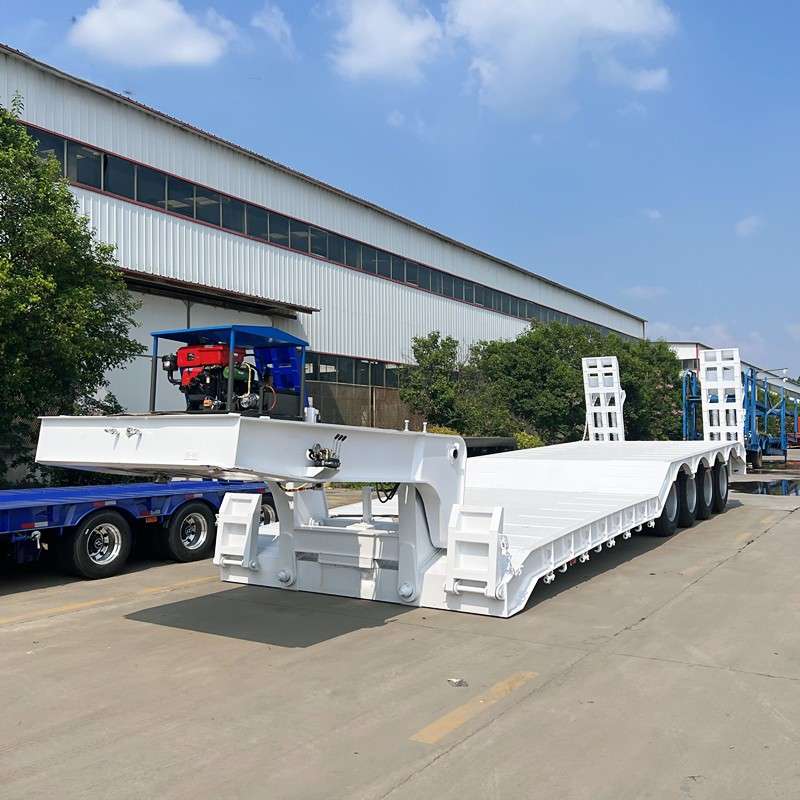
A drop deck trailer splits the deck into two levels - a raised section over the gooseneck around 1,500mm and a lower main deck near 900-1,000mm - so equipment that's too tall for a flat platform still clears standard route height limits. SIGMA's step deck design uses this lower rear section for the bulk of the cargo while the raised front carries lighter freight or nothing at all, keeping the load's center of gravity down for stability. Compared to a full flat drop deck, the two-level layout costs a small amount of usable length at the transition ramp but gains meaningful vertical clearance for machinery, pipe stacks or crated freight.
Features
- Two-level deck for taller cargo without exceeding height limits
- Lower main deck reduces load center of gravity
- Fold-down transition ramps between upper and lower deck
- Stake pockets and lashing rings on both deck levels
- Reinforced main beam in Q345B steel
- Optional widener kits for oversize crates
- Compatible with tarps or curtain systems for weather cover
Applications
- Machinery and equipment hauling
- Palletized freight over height-restricted routes
- Pipe and steel product transport
- Construction material delivery
- Crated cargo and industrial goods
- Equipment rental transport
Two-Level Deck Explained
A step deck trailer exists for one reason - cargo that's a bit too tall for a standard flatbed trailer but doesn't need the full deck drop of a heavy-haul lowbed. SIGMA builds the upper deck over the gooseneck at roughly 1,500mm and steps down to a 900-1,000mm lower main deck for the bulk of the load. That step buys back 500-600mm of vertical clearance versus a flat deck at uniform height, enough to move most machinery and stacked freight under standard bridge and overpass limits without a special permit.Drop Deck Terminology and Build
Most fleets in North America call this a drop deck trailer rather than step deck, but the two terms describe the same lower rear section. SIGMA frames the drop deck in Q345B steel with a stepped main beam rather than a straight one, which adds some fabrication cost over a flat platform but is what makes the lower deck height possible in the first place. Stake pockets run along both deck levels so cargo secures the same way whether it sits on the raised front or the lower rear section.Loading Ramps and Widener Options
Getting equipment down onto the lower level of a step deck trailer needs a short ramp at the transition point, which SIGMA builds as a fold-down steel ramp rated to the trailer's axle capacity. For cargo wider than the standard 2.5m deck, a drop deck widener for sale option bolts extra deck width onto the sides temporarily rather than requiring a dedicated oversize trailer for occasional wide loads. This keeps one trailer covering both standard and moderately oversized freight instead of running two separate units.Buying, Renting or Leasing
Fleet buyers comparing a drop deck trailer for sale against a drop deck trailer for rent or lease arrangement usually land on outright purchase once utilization passes a few loads a month, since the two-level deck works across enough freight types to stay busy. SIGMA ships these units with the standard fold-down ramp and stake pocket layout already fitted, so operators sourcing drop deck trailers for lease through a rental partner get the same spec as a direct factory order.Frequently Asked Questions
What is a step deck (lowered flatbed) trailer and how is it different from a standard flatbed?
A step deck splits the deck into two heights instead of one flat surface: a raised front section above the gooseneck around 1,500mm, and a lower main deck near 900-1,000mm. That lower section lets taller cargo clear the usual height limits that would stop it on a full flatbed at 1,400mm. The tradeoff is a short transition ramp between the two levels, which costs a bit of usable length compared to a continuous flat deck.
When should I choose a step deck over a lowbed trailer?
A step deck suits cargo that is moderately tall - up to roughly 3m - and still self-loads by ramp or forklift, such as coiled steel, packaged machinery, or palletized freight. Once the machine is a tracked excavator or anything needing a very low loading angle and deck heights of 500-900mm, a lowbed trailer is the right chassis instead. The two are complementary, not interchangeable.
What is a directional (self-steering) step deck and when is it needed?
A directional step deck adds self-steering axles that turn with the trailer's path instead of tracking rigidly straight, cutting tire scrub and improving maneuverability on tight yard turns or multi-lane roundabouts. It matters most for fleets running longer step decks with wide loads in urban or industrial zones with frequent tight turns. For long straight-line highway hauls with few sharp turns, the added steering axle is not usually worth the extra cost.
How do I balance length against load capacity when ordering a step deck?
A longer lower deck gives more room for oversize crates or pipe bundles, but it also shortens the practical axle spread available for weight distribution, since the transition ramp and gooseneck section already take up fixed length. Fleets hauling steady, moderate-weight freight generally order a longer standard deck; fleets alternating between long light loads and shorter heavy loads size the deck for the heavier case and accept some unused length on lighter runs.
Is this a step deck trailer that tows behind a pickup truck?
No — this is a heavy-duty semi step deck trailer pulled by a road tractor, built for machinery, crated freight and pipe up to 35-42 tons. Smaller step-deck trailers rated for pickup-truck towing are a different, much lighter product category that we don't manufacture; if that's what you need, look for a bumper-pull or gooseneck equipment trailer instead.
What kind of ramp does the step deck trailer use to load equipment onto the lower deck?
A fold-down steel ramp sits at the transition between the upper and lower deck, rated to the trailer's axle capacity, so wheeled equipment can drive down onto the lower level rather than being craned. Ramp angle is fixed to the deck height difference, so equipment approach-angle rating should be checked against the transition height before ordering.
Get a Quote
Interested in This Product?
Get factory-direct pricing and custom specifications. We reply within 24 hours.
Chat on WhatsAppor contact our engineers directly: info@sigma-trailer.com